
Netter Center


1992-2022
University-Community Partnerships
Democracy, Inclusion, & Social Change
Join us for 30th Anniversary Events
Our Approach
Our Approach
Three key strategies underpin our work. The first is academically based community service (ABCS), service rooted in and intrinsically connected to research, teaching, and learning. The second is university-assisted community schools (UACS), which educate, engage, empower, and serve not only students, but also all other members of the community, providing an organizing framework for bringing our programs, including ABCS courses, to West Philadelphia schools. Third, we view ABCS and UACS as core to a comprehensive anchor institution strategy in which universities engage in sustained, mutually beneficial partnerships with their communities. These strategies are shared with others across the country and around the world, serving as a model for democratic university-community engagement.
ABCS Courses
Over 70 Academically Based Community Service (ABCS) courses each year engage faculty and students across the university in real-world problem solving.
Programs
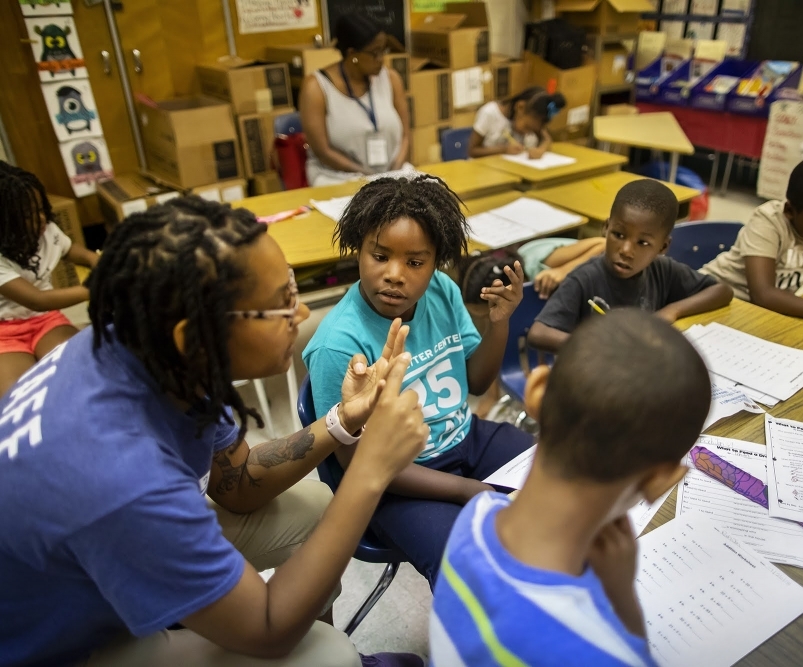
Partnerships with local schools and organizations work to advance literacy, STEM education, health and nutrition, post-secondary success, sports and fitness, arts and culture, and community economic development.

“An Inclination join’d with an Ability to serve Mankind, one’s Country, Friends and Family... should be the great Aim and End of all learning.”
Benjamin Franklin (1749)

Our Work Depends on People
.....
The Netter Center provides students, faculty, staff, alumni and community members a variety of ways to get involved in the Netter Center's work in West Philadelphia and beyond.
Connect With Us
Keep Updated
Sign up to receive our quarterly newsletters, and special announcements from time to time.
Information for Participants