| Anthropology
210: Biomedical Science and Human Adaptability
Faculty: Dr. Penny
Gordon-Larsen
Subject Area/Discipline:
Anthropology
School: University
of Pennsylvania
Project Area: Health
Spring 1997
Telephone: 898-4704
Office: Center for Community
Partnerships
Mellon Bank Bldg [36th &
Walnut],
5th Floor (519)
Overview of the Course:
This course will deal with
the issues of
community health, its evaluation, and the implementation of strategies
for effecting change. The perspective will be that of anthropology, the
social sciences, and medicine, in which community health is seen as the
interaction between biological, environmental, and sociocultural
factors.
The course deals with issues that involve interactions between these
factors
and the relation between these factors and health promotion.
The focus of the course
will be on enhancing
dietary intake and nutritional status, using as a model the approach of
Participatory Action Research (PAR). Specifically, members of the class
will participate in a PAR project at the Turner Middle School, located
at 59th and Baltimore Avenue. The project is designed to measure the
nutritional status of children
attending
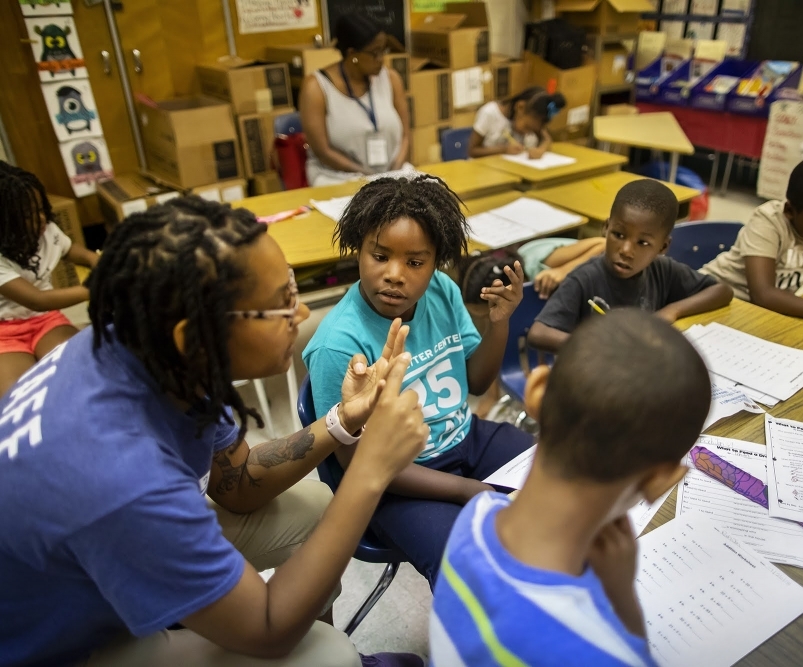
the school, to teach principles of nutrition to 6th graders, and to
evaluate
the outcome.
The Turner School Project
The project consists of
several components,
involving teaching, research, and evaluation. Students will select
(first
come-first- served) the part in which they want to work during the
semester.
The work will take, on average 3 hours per week, although the actual
amount
will vary from week-to-week. The components are:
1. Teaching principles of
nutrition (12
students)
2. Evaluating dietary intakes
(4 students)
3. Measuring and analyzing
heights and
weights (4 students)
4. School Lunch Project (4
students)
Note: Students should
decide as soon as
possible, and no later than January 23, in which area they want to
work.
This will be discussed
the first day of class,
January 16. There
will be a sign-up sheet on the door of Room 432.
In general, the plan is for
students to
work as teams on their projects, either with Dr. Johnston or Penny
Gordon-Larsen.
During class meetings we will discuss progress, problems, impressions,
and findings. Each project team will present a project progress report
at each class meeting. At the end of the course, each team will present
a summary report to the class, and each individual will turn in a
written
report of his or her work.
In-class Schedule and
Readings
There will be a set of
background readings
on issues of health, nutrition, child development, and evaluation.
These
readings will be
available as a bulk pack and
will be discussed
in class. In-class discussions will concentrate on the assigned
readings
and your experiences in the field. In addition, there will be another
bulk
pack at Campus Copy containing separate readings for each of the
project
groups (Dietary, Anthropometry, and Teaching groups) - you should pick
up your additional bulk pack after you have selected which project you
will work on. Each class meeting will be split into two parts, the
first
half of the period, roughly 1:30 - 3:00 will be spent in discussion
with
the entire class. The second half of the period we well get into our
project
teams to discuss issues pertinent to the Turner school project.
Schedule of Readings
Jan. 12 Introduction
to Anthropology
210
Jan. 19 Perspective:
Academically-Based
Community Service
Guest Speaker: Dr. Ira
Harkavy, Associate
Vice President and Director, Center for Community Partnerships
Jan. 26 Orientation
to Turner Middle
School
Class held at Turner Middle
School (Transportation
will be provided)
WEPIC activities at the
Turner School pp.
1-17. (Unpublished Manuscript)
Benson. L and I Harkavy
(1994) 1994 as
turning point: the university-assisted community school idea becomes a
movement. Universities and Community Schools 4:5-6.
Data on West Philadelphia.
Information
packet from the Center for Community Partnerships.
****ALL GROUP PROJECTS TO
BEGIN THE WEEK
OF FEB 2,1997"'
Feb. 2: The
Ecological Approach
to Health
Armelagos, GJ, et al.
(1976) The Ecological
Perspective in Disease. The Ecologist 6(2)71-83.
Feb. 9: Defining the
Problem - the
urban ecosystem
Schell, LM (1992) Risk
Focusing: An Example
of Biocultural Interaction. In: Huss-Ashmore, R. J Schall. and M.
Hediger
(eds.) Health and Lifestyle Change. Vol 9: 137-144. MASCA, The
University
Museum of Archaeology and Anthropology, University of Pennsylvania,
Philadelphia.
Cross, AT (1987) Politics,
poverty, and
nutrition. J. Am. Diet Assoc. 87: 1007- 10 10.
Assorted articles by AM
Freedman (1990)
Wall Street Journal December 17, 18, 19.
Anderson, E (1994) The Code
of the Streets.
The Atlantic Monthly, May 1994, pp. 81-94.
Feb. 16: Issues in
Intervention
(Participatory Action Research)
Townsend, JW (1987)
Intervention Advocacy
for Action. In FE Johnston (ed.) Nutritional Anthropology. NY:
Alan
R. Liss, Inc., pp 277-94.
Greenwood, DJ, et al (1993)
Participatory
action research as a process and as a goal. Human Relations
46:175-92.
Benson, L and I Harkavy
(1994) Anthropology
210: academically-based community service, and the advancement of
knowledge,
teaching, and learning: an experiment in progress. Universities and
Community Schools 4:66-9
Feb. 23: Evaluating
Nutritional
Status
Johnston, FE (198 1)
Anthropometry and
Nutritional Status. In: Assessing Changing Food Consumption Patterns,
Committee on Food Consumption Patterns, Food and Nutrition Board,
National
Research Council, National Academy Press, Washington, DC, pp. 252-64.
Dwyer, JT (199 1) Concept
of Nutritional
Status and its Measurement. In: JH Himes (ed.) Anthropometric
Assessment
of Nutritional Status, New York: Wiley-Liss, pp. 5-28
*** Bulk Pack Stops Here -
Additional Readings
to be announced***
Mar. 2: Introduction
to Nutrition
(Part 1)
Mar. 9: Spring Break
Mar. 16: Nutrition
and Health
Mar. 23:
Introduction to Nutrition
(Part 2)
Mar. 30: Early and
Late Influences
on Adult Health Status
Apr. 6: Project
Preparations - Group
Meetings (No Official Class Meeting)
Apr. 13: Project
Reports at Turner
(Class Meets at Turner Middle School)
Apr. 20: Project
Reports at Penn
(Regular Class Meeting)
Evaluation and Grading
The emphasis in the course
is upon the
integration of conceptual issues and "hands-on" experience so there
will
be a small portion of the course involved in formal testing and paper
writing.
Students will be responsible for all readings. Students will be asked
to
lead some
class discussions,
particularly those
discussions of topics relevant to the group projects and the Turner
experience.
Students will work in
teams, focusing on
the completion of the team's project. Each team member is integral to
the
whole, and full
participation during field
work is imperative.
This is of particular importance due to the fact that Turner teachers,
students, and staff
depend on your attendance.
Missing field
days is unacceptable. If there is a problem with attending any field
session
you MUST speak
with me prior to the absence.
If you expect
to miss any field session, you are responsible for finding an alternate
to attend in your stead.
Final grades will be based
upon the following
criteria:
-
Participation in class
discussions (20%)
-
Participation in Turner
school project/ Individual
written reports (50%)
-
Group presentation during
the final weeks
of class (20%)
-
Final in-class essay exam
(10%)
|