PUCFSN is a collaborative program between the University of Pennsylvania,
communities of faith, public and private schools, and neighborhood organizations
operating throughout West Philadelphia. Since 1998, we
have created vital relationships between the leadership of our constituent
members, and have established innovative collaborative projects. In
2002, our program was renewed for another four years through a grant
from the Jessie Ball duPont Fund. PUCFSN is comprised of a three-part
structure: a steering committee, an advisory board and academic interns.
The steering committee is made up of fifteen communities of faith leaders,
professors, school administrators, and community leaders meets monthly
to direct our work. The larger advisory group meets 2-3 times yearly
to learn from national leaders and to further direct and extend our
work. Lastly, students, working as academic interns, develop and facilitate
each of our projects.
Through our three-part structure, PUCFSN provides technical assistance
within a variety of project areas. Each area results from common interests
of our members who serve to guide student interns in its execution.
Some of our project areas and activities include: Extended Day Programs
and Mentoring; Adult Skills Training; Technology Classes; Computer Hardware
Refurbishment, Placement and Recycling (ie. computer labs); Health Care
Initiatives; and Academically-Based Community Service Courses. Also,
we assist local seminarians by providing unique field education placements.
1) Program activities addressing afterschool, technology,
health care objectives will be met through site-specific collaborative
projects. Each of these projects will be created and overseen by PUCFSN’s
members, and supported through academic interns and community volunteers.
Below are our goals for 2002-2006. Underneath each goal is
a listing of our accomplishments in the first six months.
A. Develop and operate six new afterschool or summer programs held
in communities of faith.
We will create at least one new afterschool and/or summer programs
annually in each of the four years. The first project sites will include
Grace Lutheran, Taylor Tabernacle, and Calvary Evangelical Lutheran
Church.
Calvary Evangelical Lutheran Church
Simpson-Fletcher United Methodist Church
Christ of Calvary - CAMP
St. Mary Episcopal Church, Hamilton Village
West Philadelphia High School (CPR)
B. Extend the work of nine successful afterschool or summer programs.
We will extend the work of at least two programs per year in each
of the four years. The first ones will likely include Sister Clara
Muhammad School and Beulah Baptist Church. Others will include Calvin
Presbyterian Church and The Ford-McKarobin Foundation of Learning.
Sister Clara Muhammad School
Beulah Baptist Church
Calvin Presbyterian Church
New Beginnings Sanctuary of Praise COGIC
C. Place twenty-one refurbished computer labs (of no less than eight
machines each) in communities of faith.
We will establish at least five new computer labs per year. We have
compiled a long list of possible sites and we are working with community
partners to prioritize this work.
Emmanuel Presbyterian Church
Freedom Christian Bible Fellowship
Triumphant Faith International Worship Center
Eastwick United Methodist Church
Crusaders Community Development Corporation
Millennium Baptist Church
World Tabernacle
Gate to Heaven Ministry
Conquerors CDC/Victory Christian Center
Sayre United Methodist Church
Wharton-Wesley United Methodist Church
Holy Cross Baptist Church
D. Develop and teach nine new technology classes which provide job
training, basic and advance software skills, and experience in working
with hardware.
We will develop and teach nine new technology classes in communities
of faith. Such classes provide job training, basic and advanced software
skills and experience in working with hardware. We will create at
least two programs per year in each of the four years. These will
include St. Cyprian Catholic Church, Metropolitan Baptist Church,
The Ford-McKarobin Foundation of Learning, Taylor Tabernacle Expanding,
and Calvary Evangelical Lutheran Church.
First African Presbyterian Church
Taylor Tabernacle
Monumental Baptist Church
Potter House Mission
Train the Trainers course
E. Develop three new "academically based community service"
classes at Penn, and three new urban ministry classes in conjunction
with local seminaries.
At Penn, we will build upon the successful courses recently established
in the Religious Studies and Music Departments, establishing three
new courses over the next four years. Three other courses will be
created at the local seminaries over the life of the grant.
David Henfield
Plans for an education series and spring health fair
Hillel volunteers help at Health Clinic
F. Expand health care knowledge and services to the community through
congregational nurses, community schools, screenings, and the outreach
of the hospital of the University of Pennsylvania.
In this area, we will work with the community outreach health program
at Penn’s School of Nursing directed by Margaret Cotroneo. We
will share information and have our leadership committees’ work
jointly to help strengthen our outreach. We expect cooperation will
lead to improvements in our current health outreach, and the development
of plans for future collaborations and future joint grant applications.
Furthermore, we have agreed to have our students’ work jointly
to advertise our programs and to have our programs send referrals
to each other.
G. The thirty academic interns who staff these projects will be overseen
by the program director, a half-time doctoral student at the University.
A full-time AmeriCorps VISTA member will make regular site visits
to each of the projects, help to direct academic interns, and maintain
the program office. An associate director seminarian, a new position,
will direct seminary activities. The success of each of our projects
requires ongoing collaboration. This collaboration and the relationships
it depends upon require extensive work by program staff.
Currently 18 students have been hired
2) The seminarian associate director will oversee
all seminary related activities. These activities will include the development
of one new course and one large meeting in conjunction with the seminaries
each year. Field placements and clinical pastoral education (CPE) programs
will be developed that connect to PUCFSN’s work. Seminarians will
also be engaged as volunteers to support the projects listed above.
This new partnership will substantially expand the human resources available
for meeting community needs, and most importantly, will be a mutually
beneficial partnership, providing meaningful academic and field placement
partnerships for the seminaries.
3) Three large meetings will be held each year. One
of these meetings will be a day-long event and feature a prominent national
speaker. A second meeting will be held in conjunction with local seminaries.
The third meeting will be held in conjunction with coalitions from neighboring
cities including New York, Baltimore, and Washington, D.C.
4) Penn’s commitment to this program will deepen
in many ways. One new class will be developed each year, which engages
professors and students in PUCFSN’s work. Student volunteers and
workstudy students will be increasingly utilized to run PUCFSN projects.
One way to do this will be to connect existing student groups to specific
projects to provide their ongoing support. PUCFSN will further expand
partnerships with University programs including Civic House, the Office
of Community Relations, the Urban Studies department, and Dubois House,
which will further increase PUCFSN’s infrastructure and accomplish
the objective of embedding PUCFSN’s work into the life of the
University.

Goals
The Program in Universities, Communities of Faith, Schools, and Neighborhood
Organizations (PUCFSN) under the direction of Dr. Ira Harkavy, Director
of the Center for Community Partnerships, and Rev. William Gipson, Chaplain
of the University of Pennsylvania, was created to connect area leaders
to one another in lasting relationships to meet the shared needs of
West Philadelphia.
The stated objectives of the program are to 1) develop new and expand
existing projects in the areas of afterschool programs, technology,
and health care; 2) extend PUCFSN’s partnerships to include local
seminaries as central members of its work; 3) strengthen and expand
the relationships between community members through regular meetings;
and 4) further embed PUCFSN’s work into the life and goals of
the University of Pennsylvania.
Therefore in the past year we have focused on expanding our program
activities across each of the grant areas. We have begun the process
of collaboration with local seminaries and seminarians.
This second four-year grant has continued the essential partnerships
and program activities of the first grant cycle. The two-tier advisory
structure has been slightly modified to create a new, smaller Steering
Committee comprised of pastors, Penn faculty and staff, public school
administrators, community leaders and seminarian representatives that
meets three to four times a year and offers direction and feedback for
our endeavors and these members are joined by others (similarly comprised)
to form the larger Advisory Group. The Advisory Group meets twice a
year for further discussion and guidance. These members form the core
relationships necessary for continued success of our programs and partnerships.
This structure provides regular guidance from and discussion with the
Steering Committee and wide based support from the Advisory Group.
University of Pennsylvania students continue to provide much of the
energy, creativity and work on specific programs. While working on specific
sites or project areas our academic interns partner with community of
faith leaders and volunteers to develop and expand site activities.
They work under the direction of site-based community of faith coordinators
and they are placed by our Program Director. Our students are characterized
by their independence and commitment of focus. This year we continue
to expand in areas by bringing in new community partners and new student
workers. Also, Seminarians have joined our work and participate in field
education at our community sites.
Accomplishments
- New after school and summer programs
- We have supported five new youth programs this school year.
- Calvary Evangelical Lutheran Church
- Calvary Evangelical Lutheran Church, hosts the Expressions program,
an
- Afterschool program that uses the arts to enhance academic skills.
Expressions
- Works collaboratively with the Foundation Community Arts Initiative,
a
- Community gathering site that promotes arts and culture, and Shaw
Middle
- School, a local school two blocks away from Calvary Lutheran Church.
Students were selected by their sixth grade teachers who felt that
they would benefit from the Expressions program. Ten students participate
in the program. Twice a week, two PUCFSN interns lead a variety of artistic
activities including projects focusing on identity, family, community,
and neighborhood redevelopment. Individual journal writing and reflection
follows the interactive and collaborative group projects.
Special workshops are held monthly with local artists at the Rotunda,
the Foundation’s building. Workshops are intended to generate
an awareness among the Expressions students as to what they can accomplish
as activists, artists, or community leaders. Artists are chosen by how
they can act as role models to the students and how they can engage
the students in a fun and challenging artistic activity. Recently workshops
have included mask making with Spiral Q Puppet theater on identity,
portrait painting with a local painter, as well as a look at neighborhood
history by Frances Aulsten at the Paul Robeson House which is a part
of the West Philadelphia Cultural Alliance. Ms. Wells at Shaw Middle
School, who helped recruit students for the program, has reported that
the students have since shown improvement in their class work.
Simpson-Fletcher United Methodist Church
At Simpson-Fletcher United Methodist Church, Reverend Robert Johnson
with the help of two PUCFSN academic interns designed and started this
fall an afterschool program for elementary students in the surrounding
community. This fall approximately six students received homework assistance,
computer instruction, and academic enrichment three afternoons a week.
Pastor Johnson was especially pleased with the dedication and enthusiasm
of our interns.
Christ of Calvary – Collaboration in Action Mentoring
Program (CAMP)
Under the direction of Reverend Rodney Rogers, CAMP has trained mentors
from Christ of Calvary and Sayre United Methodist to mentor seventh
graders from Sayre Middle School. In addition to the mentoring program
volunteers, PUCFSN academic interns and Henry Gordon, a teacher from
West Philadelphia High School, tutor students in math and literacy.
Finally, the program has a nutrition component that engages students,
their families, and mentors twice-monthly in workshops on nutrition
and healthy eating.
St. Mary Episcopal Church, Hamilton Village
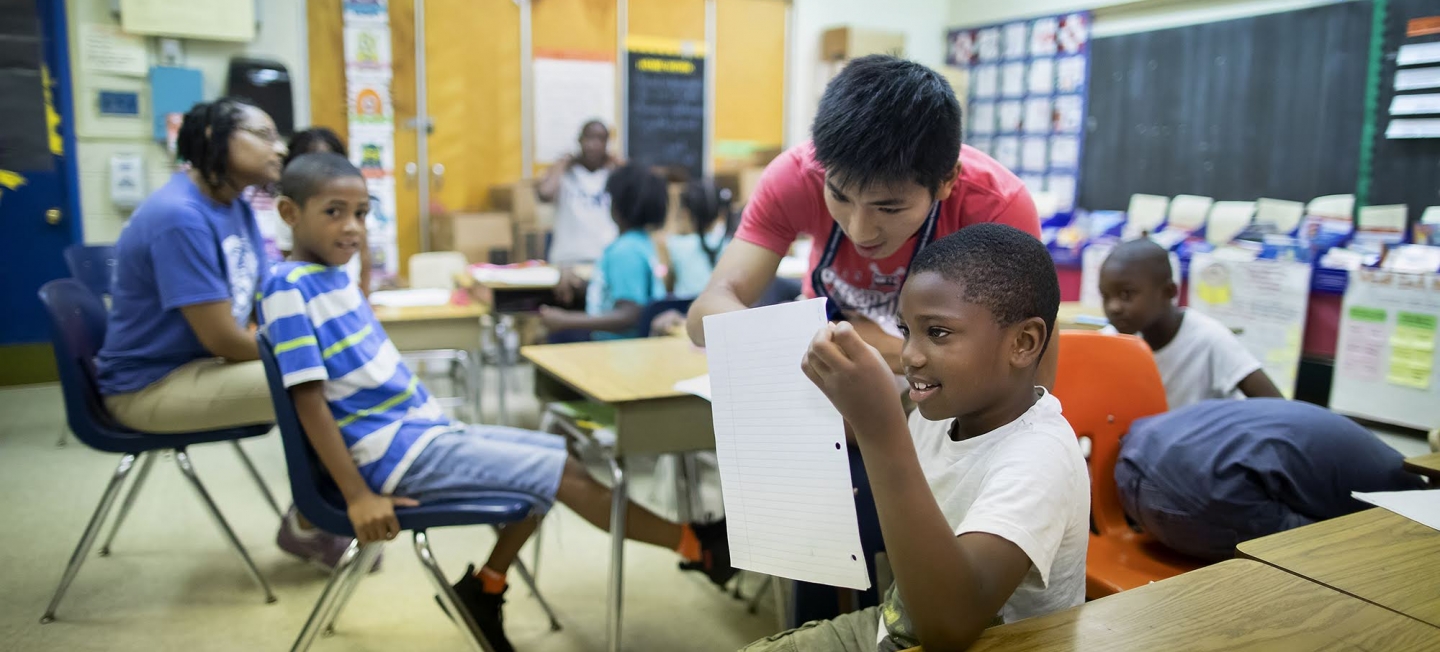
PUCFSN academic interns assist in St. Mary's existing afterschool program
housed at Lea School. The afterschool program tutors students in math
and reading four days a week. In addition, on Mondays the program moves
to St. Mary's where the students are producing a play on civil rights
issues. Besides PUCFSN interns, St. Mary’s has recruited several
other volunteers to join in producing the play and teaching enrichment
curriculum.
West Philadelphia High School – Community Partners in
Resourcing (CPR)
Reverend Rodney Rogers, with the help of a seminarian and an intern,
works in a Small Learning Community at West Philadelphia High School
to counsel and assist in disciplinary action with non-motivated students.
So far, they have found alternatives to suspension and are working to
expand these options to more students in difficult situations. In the
future, we are working to organize community and faith leaders to collaborate
in a plan of action to the needs of West Philadelphia High School students.
Through such collaboration we are hoping to improve the learning environment
in the schools, promote effective disciplinary solutions, and increase
the productive use of a student's time.
Extend the work of afterschool programs
We have continued and expanded our involvement with four children and
youth programs. Community of faith members lead these programs (two
of which are faith-based schools) with the assistance of Penn students.
Sister Clara Muhammad School
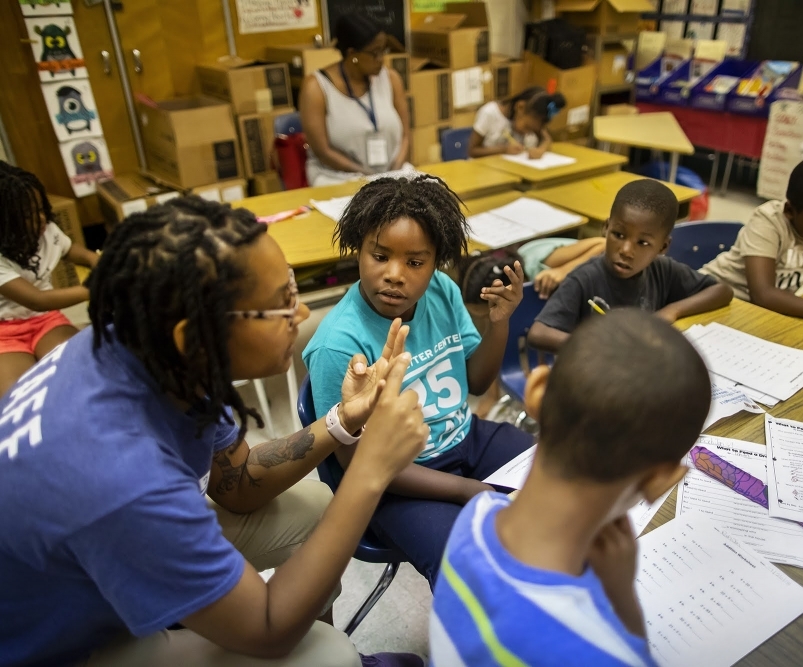
Several PUCFSN interns have tutored and provided classroom assistance
at Sister Clara Muhammad school. For example, one intern helped a third
grader improve his reading skills. Providing one-on-one enrichment in
a variety of subjects gives teachers the opportunity to focus on other
students. The interns enjoy the atmosphere of this friendly school.
PUCFSN has also supported the school’s proposal to become a charter
school focusing on Middle Eastern subjects and issues.
Beulah Baptist Church
One PUCFSN intern continues to teach computers at Beulah Baptist School.
Originally only for second and third grades, the program now covers
older children as well. Without our assistance students would have very
limited access to computers at school. Interns teach them the skills
they need to use technology in their schoolwork in later grades. Our
intern reports teaching within the school environment provides for excellent
discipline and attentive students.
Calvin Presbyterian Church
Our academic interns continue to assist in the afterschool program
at Calvin Presbyterian. The afterschool program includes homework help,
math and literacy tutoring, as well as computer instruction. Interns
especially bring the computer knowledge to enable the computer instruction
as part of this afterschool program. By adding this knowledge, PUCFSN
increases the capacity of this continuing program.
New Beginnings Sanctuary of Praise COGIC
Last summer, two PUCFSN interns provided needed assistance in the summer
camp of New Beginnings Sanctuary of Praise COGIC. Run by church volunteers
with the help of other communities of faith volunteers, the camp was
an excellent example of joint partnership with PUCFSN interns. The community
of faith leaders state that without the PUCFSN interns, the program
would have been impossible. Children and adults alike raved about the
energy and caring the two interns displayed. This camp has extended
its length of operation each year, at the request of parents and children.
Technology Classes
We have technology classes in cooperation with community volunteers
and Penn students at three sites.
First African Presbyterian Church
The computer courses at First African Presbyterian Church focus mainly
on seniors who have gained some computer skills in previous classes
and now desire new advanced classes. These courses enable the students
enrolled in the classes to learn how to use technology to improve their
quality of life. As their skills improve it has become necessary to
expand the classroom offerings for both beginners and more advanced
students.
Potter House Mission
Classes at the mission are geared to adults who have no computer skills.
These classes, focusing on computer basics, provide students with skills
to compete on the job market. Courses like this one provide students
the opportunity to learn skills that they can use to improve their employment.
Train the Trainers course
This program is a 6-8 week course on teaching technology geared towards
both current and prospective computer teachers in the West Philadelphia
community. It is designed for those who already possess a working knowledge
of computers from their home, professional or academic use.
The goal of Training the Trainers is to create a positive environment
in which participants both critique and learn from each other in order
to develop and refine their teaching skills. The first three classes
cover teaching fundamentals, detail how to outline a course, how to
create a lesson plan and offer suggestions on teaching technology. In
the second half of the course, participants prepare and teach their
own lessons. This exercise is designed to boost participants’
teaching confidence while providing an opportunity to receive constructive
comments from their peers and detailed, personal feedback from the course
facilitators.
Computer Labs Created
In conjunction with the Digital Divide Program, we are creating and
expanding fourteen computer labs this year in communities of faith with
a total of 157 computers as listed below. In addition through the Digital
Divide Program we are providing ongoing support to these computer labs.
Each of these communities is invited to send several individuals to
our Training the Trainers course to ensure that they have the capacity
to utilize their computer labs. Several of these communities of faith
are already teaching classes and utilizing their computer labs to improve
their neighborhoods. We hope to work with these new partners, and others,
to improve not only access to technology, but also to offer the curriculum
and technical support necessary for serious, long-lasting impact.
- Calvary Baptist Church, 12 computers
- Conquerers Community Development Corp., 12 computers
- Crusaders Community Development Corp., 16 computers
- Eastwick United Methodist Church, 12 computers
- Freedom Christian Bible Fellowship, 12 computers
- Gate to Heaven Ministry, 12 computers
- Millennium Baptist Church, 12 computers
- Mt. Olivet Baptist Church, 12 computers
- New Beginnings Church, 3 computers
- Potter’s House Mission, 12 computers
- Sayre United Methodist Church, 8 computers
- Second Antioch Baptist Church, 10 computers
- Wharton Wesley United Methodist Church, 12 computers
- Word Tabernacle, 12 computers
Health Care
Reverend David Henfield, Trauma Chaplain at the Hospital of the University
of Pennsylvania, has headed up our efforts in this area. He has worked
with leaders of faith communities to access specific health issues and
needs. With his help, two PUCFSN interns have recruited doctors and
other speakers for a rotating community of faith health education series
We have worked in conjunction with three communities of faith: Gate
to Heaven, Crusaders for Christ and Calvin Presbyterian Church.
We are continuing this program with additional communities of faith,
with the expectation that our hosts will collaborate with other organizations
and communities of faith to jointly host these speakers. This initiative
aims to bring pertinent health information to communities that lack
easy access to these subjects. In addition, we are planning a health
fair in the fall hosted by local communities of faith. We are also exploring
ways to collaborate with other health care initiatives to use technology
to provide additional resources, utilizing the computer resources at
Sayre Middle School, and a computer based health care curriculum and
resource list developed by the Digital
Divide Program.
This fall, we developed a partnership with Tzedek Hillel (a student
led community service organization) and a free Health Clinic at First
African Presbyterian Church. The clinic is staffed by University of
Pennsylvania Medical, Nursing and Social Work graduate students. Tzedek
Hillel students assisted in surveying patients and making information
readily and clearly available to attendees.
Seminarians
One exciting new partnership in this grant cycle is the opportunity
of closer collaboration with local seminaries. This summer, in cooperation
with our community partners, we developed several field education opportunities
for seminarians at Lutheran Theological Seminary. The director of Contextual
Education, Dr. Charles Leonard, in addition to President Philip Krey,
has been committed to this partnership and he chose two seminarians
to work with us at our non-traditional field education sites. Stephanie
Collins is working with Rev. Rodney Rogers at West Philadelphia High
School. She provides counseling and assesses the needs of students and
families, working with staff to determine the best possible solutions
for students in need. Stephanie has taken on responsibilities in facilitating
meetings with potential community partners with a goal of providing
long-term solutions to some of the challenges facing students at West
Philadelphia High School. A’Shellarien Smith is working with Rev.
Kevin Porter and a newly formed group of five West Philadelphia Presbyterian
churches called the "Philadelphia Working Five." With new
joint funding and a new mandate this group is expanding the role of
these five churches as an independent organization. A’Shellarien
visits and participates in their individual services, meets their pastors,
and attends their monthly working group meetings. This has afforded
her the opportunity to witness how churches with complex, even competing
histories, negotiate an expanding partnership. In addition she has worked
with our health initiative to establish a series of health education
talks with one of these parishes. She has been able to connect our resources
in other ways as well, for example, in explaining Partners for Sacred
Places to one pastor and planning a youth fair with another. We are
pleased to work with these talented seminarians and to be able to offer
such unique opportunities for urban field work.
Lutheran Theological Seminary, Reconstructionist Rabbinical College,
and Princeton Theological Seminary field education directors: Dr. Charles
Leonard, Rabbi Gail Glicksman, Dr. Harry Freebairn, Chester Polk, and
Kate Bilis-Bastros. joined our steering committee in January to discuss
deepening and expanding our interactions. These directors were excited,
committed, and clear about the future of this program. They also suggested
possible collaborations for urban ministry courses. We have met with
Dr. Katie Day of Lutheran Seminary, director of their urban ministry
concentration to discuss possibilities for joint courses between the
University of Pennsylvania and Lutheran. The Reconstructionist Rabbinical
College has a strong social action component, and Rabbi Glicksman has
already explored the possibility for students to receive credit for
coursework related to our field education options (mainly non-Jewish).
Meetings
Meetings continue to be essential to developing and maintaining our
partnerships. The Steering Committee (formerly the Working Group) has
met twice. In June they worked to plan activities and add new programs.
In January, joined by seminarian field education directors, they discussed
seminarian partnerships and goals. The Advisory Group met in November
to hear about programs and share ideas and stories. They convened several
smaller committees to plan the Spring Conference and develop the health
initiative. In addition, we have helped facilitate the following meetings
to expand the relationships between community members:
Last spring, several staff members from the CCP joined to create and
develop a Communities of Faith Non-Profit Institute (CONFI). COFNI was
held for five days in late October and focused on church finance administration,
501c(3) creation, risk management, insurance and accounting. Twenty-five
members of Communities of Faith participated in this training and professional
development institute. We have since established further contact with
several of these new partners and will work for continued development
of relationships.
Program in Nonprofits, Universities, Communities and Schools (PNUCS).
This fall university leaders from across the country came together for
a conference on community partnerships. They met with some of our community
of faith partners over a two day period. Our religious leaders shared
their experiences with PUCFSN as well as their hopes and dreams for
further collaboration. Their articulate, moving testimonies impressed
the visiting faculty and led to a frank conversation. As a result of
the expressed wish of several pastors for greater architectural assistance,
we have expanded our contacts with Partners for Sacred Places. Partners
is a non-profit organization that provides expertise in fundraising,
grant writing, and building usage assessments for older religious buildings
in Philadelphia and around the country. With our encouragement, several
of our community partners have decided to take the free training offered
Partners for Sacred Places.
The PUCFSN Spring Conference “What about the Children? The Response
of Communities of Faith to Children’s Issues” was held on
April 30th at Sister Clara Muhammad School, approximately 75 people
attended. In the midst of recent tragedy at Sister Clara Muhammad School,
the principal Dr. Faridah Ali gave some inspirational remarks. She asked
the question, “If the religious communities cannot come together
to address the challenges of the neighborhoods, my God who then?”
Mr. Kenny Gamble, a Philadelphia-native Grammy award winner and philanthropist,
was the keynote speaker. Mr. Gamble discussed the fact that children
only respond to what they are seeing. He advocated for the importance
and necessity of going into the communities, taking over the street
corners, and talking to the people. He also provided a brief overview
of the model provided by Universal Companies. Naomi Post Street served
as the moderator for the Panel on Children’s Issues and Roles
of Communities of Faith in response to These Issues. Ms. Post Street
is a Child Advocate and a Consultant of the Robert Wood Johnson Foundation.
The panel members included Loretta Sweet Jemmott, from the University
of Pennsylvania’s School of Nursing, Reverend Joseph Conner, from
New Beginnings Sanctuary of Praise, and Shelly Yanoff, from the Philadelphia
Citizens for Children and Youth. These experts provided concrete ideas
for communities of faith to continue and improve addressing children’s
issues.
Academically Based Community Service (ABCS) Courses
Dr. Timothy Rommen, Assistant Professor of Music (Ethnomusicology)
was offer a course entitled “West Philadelphia Gospel Music -
Communities of Faith, Faith in Community. The goals of this course are
to facilitate a collaborative research environment, to produce a CD-Rom
documentary, and to use the documentary as a first step toward creating
an accessible, internet-based archive of West Philadelphia gospel music.
Several other professors have expressed definite interest in developing
ABCS courses. We are hopeful that courses will be offered by Dr. Barbara
Savage (History) and Dr. Leslie Calahan (Religious Studies). There are
several new faculty in the Religious Studies Department who we hope
will develop new courses related to West Philadelphia. Our community
partners are able to provide considerable assistance to faculty new
in the area, both in their areas of research expertise and the development
of new course offerings on religious diversity in Philadelphia.
Challenges and Solutions
As information spreads about our programs, we have gained many new
partners. The challenge is to hire enough students to staff new program
activities each semester, while at the same time maintaining our prior
commitments. We are also asking each community of faith partner to provide
volunteers as well as transportation for our interns. We hope that with
these requests, we will provide for better long term sustainability.
This year we had greater difficulty finding a seminarian associate
director than envisioned.
Future Directions
We expect to continue to attract, or recruit community partners while
at the same time expanding our existing and founding programs. Our work
with local seminaries and seminarians is at the beginning stage but
we are excited about its possibilities. At this time we have some relationship
with approximately eighty communities of faith and an active relationship
with forty-five. Urban ministry and ABCS courses will allow us to further
integrate PUCFSN’s work with both seminaries and the University
of Pennsylvania.