Reto Gieré on energy systems, waste, and sustainability
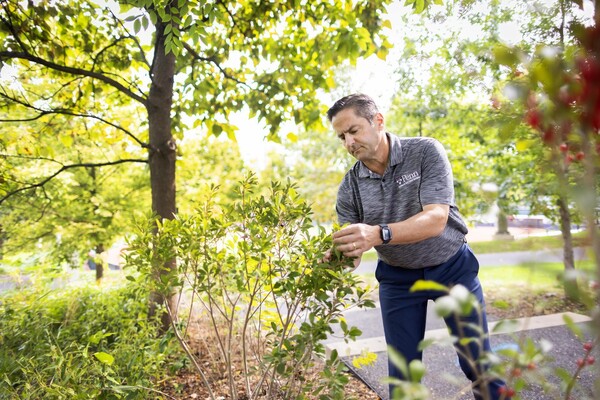
The earth and environmental science professor invites his students to view sustainability as integral to industry and to reconsider waste as a potential resource for reuse.
Stay up to date on University Announcements and Penn-related news concerning sustainability and climate action.
The earth and environmental science professor invites his students to view sustainability as integral to industry and to reconsider waste as a potential resource for reuse.
Urban planners Scott Page and Jamie Granger have been teaching Climate Resilience Studio since 2016, bringing their expertise from Interface Studio into the classroom.
R. Jisung Park, an environmental and labor economist at the School of Social Policy & Practice, discusses climate change and the impact of extreme heat on academic success and worker productivity.
A roundup of stories from Penn Today on solar innovation and protection.
Research from Wharton’s Parinitha Sastry reveals how climate risk is being mispriced in mortgages and property insurance, leaving homeowners to pay the price.
Through the Goldsmith Sustainable Agriculture Fund at the Kleinman Center for Energy Policy, Penn researchers are responding to a significant science-to-policy gap.
Omnia’s latest podcast series, ‘Horizons,’ draws on the School of Arts & Sciences’ newest vision for navigating a changing world.
A roundup of Penn Today stories focusing on green infrastructure on campus, in research, in higher education, and in energy policy.
Jay Kirk’s Xfic Nonfiction Workshop this past semester focused on the American lawn—which students approached through the lenses of environmental studies, history, gender and media, veterinary medicine, and more.
Research from climate scientist Michael Mann, Presidential Distinguished Professor of Earth & Environmental Science, and colleagues vindicates climate models and reframes the record heat of 2024.
“Supply chain spillovers due to heat upstream actually lead to measurable downstream firm valuation impacts,” says R. Jisung Park of the School of Social Policy & Practice and the Wharton School.
Michael Mann of the School of Arts & Sciences comments on the consequences of global warming.
Michael Mann of the School of Arts & Sciences discusses the impacts of aerosols and natural fluctuations on global warming.
Michael Mann of the School of Arts & Sciences comments on a study that indicates underestimation of potential sea-level rise.
Michael Mann of the School of Arts & Sciences comments on the Doomsday Clock.
Research from Michael Mann of the School of Arts & Sciences shows how strong nor’easters are becoming stronger.
Michael Mann of the School of Arts & Sciences published a paper about warmer sea temperatures influencing snowstorms.
Benjamin Keys of the Wharton School says climate change is making insuring homes riskier and more expensive.
Michael Mann of the School of Arts & Sciences welcomes a recent UN climate report’s emphasis on tackling issues across governments and society.
A Wharton School study found that homes damaged by Hurricane Harvey in 2017 were far less likely to default if they were inside the federal flood zone.
A roundup of stories from Penn Today on water quality, AI and sustainability, clean fuel production, and managing stormwater runoff.
Inspired by the cracked, water-trapping skin of elephants, Penn researchers have developed a low-cost cement tile that cools buildings by capturing and slowly evaporating water—turning a structural flaw into a climate solution.
A roundup of stories from Penn Today on solar innovation and protection.
Microplastics researchers Samantha McBride and Derek Ho of Penn Engineering and Vijay Bhatia of the Philadelphia Water Department discuss how microplastics get into ecosystems and human bodies, offering practical ways to minimize exposure.
Through the Goldsmith Sustainable Agriculture Fund at the Kleinman Center for Energy Policy, Penn researchers are responding to a significant science-to-policy gap.
A roundup of Penn Today stories focusing on green infrastructure on campus, in research, in higher education, and in energy policy.
The undergraduate and graduate students involved in Penn Sustainability Consulting provide pro bono services to business, nonprofit, and government clients around the globe.
Jay Kirk’s Xfic Nonfiction Workshop this past semester focused on the American lawn—which students approached through the lenses of environmental studies, history, gender and media, veterinary medicine, and more.
President’s Sustainability Prize winner Nhlanhla Mavuso’s Fluid Silicon platform helps computer chips monitor their own performance in real time, reducing wasted energy and improving efficiency as demand for AI-scale computing grows.<br />
Working with community partners, Penn offices offer options for off-campus pickups, on-campus donations, and additional curbside trash pickup days aimed at keeping the neighborhood clean and limiting what ends up in the landfill.
Nina Morris of the sustainability office discusses reduction of campus move-out waste.
Angela Pachon of the Kleinman Center for Energy Policy in the Weitzman School of Design comments on the importance of a track record when advocating for sustainable energy.
John Quigley of the Kleinman Center for Energy Policy at the Weitzman School of Design says that the construction of every new natural gas plant is a setback for climate goals.
A report by the Kleinman Center for Energy Policy at the Weitzman School of Design predicted that fuel standard changes in California could increase the cost of gas by 85 cents a gallon through 2030.
Danny Cullenward of the Kleinman Center for Energy Policy at the Weitzman School of Design says that the negative impacts of biofuels on land are difficult to overstate.
Penn’s Climate and Sustainability Action Plan outlines the University’s efforts to combat climate change during the next five years.
Michael Mann of the School of Arts & Sciences discusses how much a president can do or undo when it comes to environmental policy.
Michael Mann of the School of Arts & Sciences voices his concern about the possibility that the U.S. could become a petrostate.
Michael Mann of the School of Arts & Sciences says that total carbon emissions including fossil fuel pollution and land use changes such as deforestation are basically flat because land emissions are declining.
Jennifer Wilcox of the School of Engineering and Applied Science and Kleinman Center for Energy Policy at the Weitzman School of Design says that the carbon-removal potential of forestation can’t always be reliably measured in terms of how much removal and for how long.
November 29, 2022
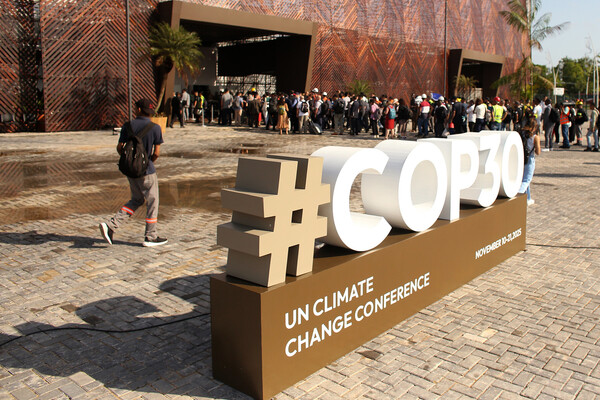
The world gathering in Egypt for COP27 reminds us of the urgency of our collective fight against climate change. Faculty, student, and staff attendees from Penn represent the energy and talent that so many Penn community members contribute to this crucial effort.
March 02, 2022
In April 2021, the Office of Investments set a goal of reducing the net anthropogenic greenhouse gas emissions associated with the endowment’s investments to zero by 2050. Since then, we have collaborated with Penn’s Investment Board to develop a framework for achieving net zero.
April 07, 2021
Combating climate change is one of the paramount challenges of our time. We write today to update the University community on a significant new initiative that Penn is undertaking.