
News

The King’s ransom: What LeBron James could mean for Philly’s economy

$12M commitment from The Howley Foundation expands Howley ASPIRE Nurse Scholars Program at Penn Medicine

Penn launches new tool to help families understand their individualized cost of attendance

Context is key in how people understand language
News

A creative approach to learning biology

Mind the gap(s): Crossing languages, cultures, and time

Using AI to integrate design and finance

Annie Liang-Zhou: Building on a legacy in historic preservation

The wild botanicals of the Atlantic world

A summer of research and teaching with Scribe Video Center
News

The secret to smarter teams? How you connect them
Context is key in how people understand language

Examining Foucault’s impact, 100 years after his birth

A deep dive into early 19th-century Native American history

Preparing school counselors to support students of all ages

Julie Petersen: Helping children thrive
News
The King’s ransom: What LeBron James could mean for Philly’s economy

Golkin Family Foundation gift launches next era of law and technology at Penn Carey Law

The long view of long-term care

Why authors are better at predicting impact than peer review

Filling in the gap: Testing the ability of humans and AI models to determine missing information in contracts

Cookstove subsidies fight climate change at a lower cost
News

With a flick of a switch: Reducing addiction risk from opioid painkillers

World Space Week story roundup

What ‘pristine relics’ at the edge of the solar system reveal about how planets formed

Mapping Lenape plant knowledge

Diving for research

How the environment around collagen shapes its growth
News

AI helps detect media bias, informing voters and news consumers

Sowing sensors, harvesting solutions

Linguistics Data Consortium: Shaping modern AI

Space invaders: What cybersecurity looks like in space

Naomi Blau and Moaz Elgeziry: Updating a radio astronomy instrument at the Green Bank Telescope

From the RoboRacer course to the RoboRacer track
News
$12M commitment from The Howley Foundation expands Howley ASPIRE Nurse Scholars Program at Penn Medicine

Advanced diffusion MRI dataset offers new view of adolescent brain development

Nearly twice as many people quit smoking when offered cash rewards

Rare Russian trotter gets relief through a pioneering Penn Vet surgery

Scheie Eye Institute in MOTION

AI platform allows real-time conversation between patients and their medical devices
News

Fall fun at the Morris Arboretum & Gardens

The 2026-27 Equity in Action Visiting Scholars

Ten years of innovation, entrepreneurship, and impact at Pennovation Works

Penn receives $20M commitment from Scott and Elena Shleifer to expand opportunity and advance key University priorities
Penn launches new tool to help families understand their individualized cost of attendance

‘What does caring for each other mean on a college campus?’
News

One School’s push for hosting and spearheading international fieldwork

Financing resilience for ocean economies

Learning from the practitioners of statecraft

Spring Intercultural Ventures explore geopolitics and economic change on the ground

Expert viewpoints on the Iran war

Solar solutions for farmers in The Gambia

Health & Medicine
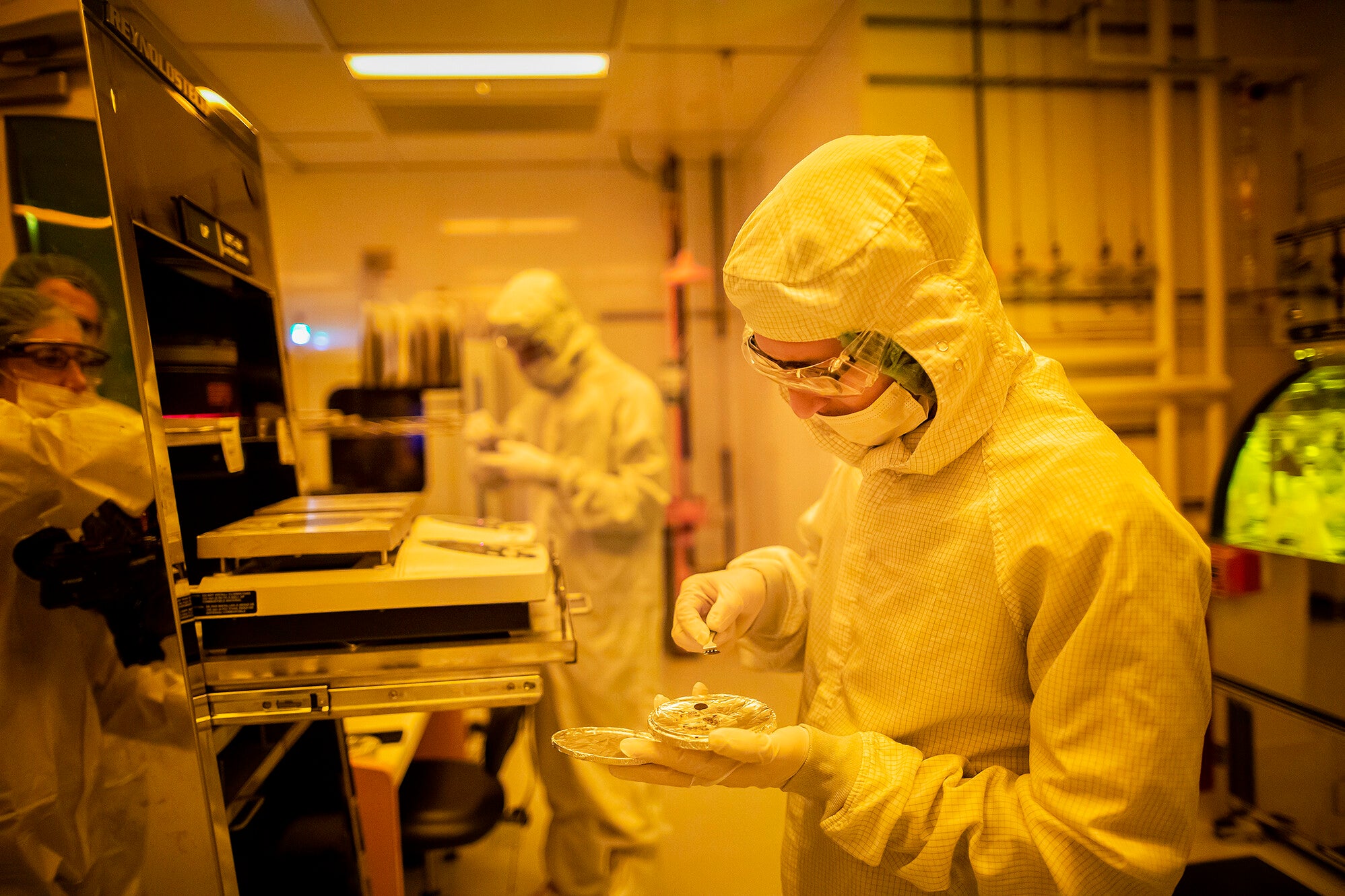
First human clinical trial to test precision form of FLASH proton therapy
Penn Medicine has launched the first human clinical trial that tests a faster, more powerful, and potentially less-toxic form of radiation therapy for cancer treatment.
Upcoming Events
 Talks
Talks
Data Empire: A Conversation with Roopika
Penn alum Roopika Risam, professor of digital humanities and social engagement at Dartmouth College, explores how histories of race, empire, and technology shape the modern world. “Data Empire,” her most recent book, reveals the hidden history of information as a technology of power. Spanning from the first written records in ancient Mesopotamia to today’s algorithmic systems, Risam shows how data has long shaped who counts, who belongs, and who can be governed—and why understanding that history is essential to navigating the age of AI. Free and open to the public. Register to attend.
Who Speaks for Music?: Critics, Audiences & Public Culture
Penn’s Department of Music will host a presentation and panel discussion marking the publication of “Defending the Music: Michael Steinberg at the Boston Globe (1964–1976),” co-edited by Penn graduate student in historical musicology Jacob Jahiel alongside Susan Feder and Marc Mandel. This program, free and open to the public, will examine the evolving place of music criticism in contemporary culture as the conversation shifts from traditional newspapers to digital platforms, podcasts, newsletters, and social media. The event will be followed by a reception with light refreshments.
 Special Events
Technology, Security, and Society in the Age of AI
This launch event for the Schlein Center for Cybersecurity is themed “Cybersecurity at the Crossroads: Technology, Security, and Society in the Age of AI.” Speakers include Penn President J. Larry Jameson; Ted Schlein, chairman and general partner of Ballistic Ventures and Trustee of the University of Pennsylvania; Vijay Kumar, Nemirovsky Family Dean and Professor at Penn Engineering; Michael Hicks, Cecilia Fitler Moore Professor, Computer and Information Science and director of the Schlein Center for Cybersecurity at Penn Engineering, and others. Free and open to the Penn community. Register to attend.
Title IX Compliance in Athletics
Penn's Title IX Resolution with the U.S. Department of Education Office for Civil Rights
Penn's Way: Going the Distance for Our Community
Penn's Way, our annual workplace giving campaign (October 1 - November 20) is making strides in supporting critical programs that beneft people in need. Give from the heart and max your match. *100% match for every dollar up to $2,500 and a 50% match on gifts of $2,501, up to $20,000.
Penn Priorities
A look at a few of our big picture priorities that improve Penn as we create knowledge to benefit the world.



Stay Connected





Equal Opportunity and Nondiscrimination at Penn
The University of Pennsylvania seeks talented students, faculty, and staff with a wide variety of backgrounds, experiences, and perspectives. The University of Pennsylvania does not discriminate on the basis of race, color, sex, sexual orientation, religion, creed, national origin (including shared ancestry or ethnic characteristics), citizenship status, age, disability, veteran status or any other class protected under applicable federal, state, or local law in the administration of its admissions, financial aid, educational or athletic programs, or other University-administered programs or in its employment practices. Questions or complaints regarding this policy should be directed to the executive director of the Office of Equal Opportunity Programs; Franklin Building, 3451 Walnut Street, Suite 421, Philadelphia, PA 19104-6106; or (215) 898-6993.