
News
News

Reimagining a shelter as a supportive space for childhood

Connecting Black culture, music, and community with the built environment

The performing arts at Penn: Process, practice, and purpose

Ani Liu: Motherhood, microplastics, and her multimedia works on display

The art of retelling ancient stories: A Q&A with Steven Weitzman

Music, friendship, and a podcast on the side
News

Why young voters tune out

Emmy Keogh is buttering up her post-graduation plans

Sacrifice versus suffering: Examining unheard stories of the past

Equipping students and nonprofits for impact

How population changes are impacting primary education worldwide

Founding-era research and the social context of public institutions
News

Tracing the evolving law and business of TV

Five things to know about private credit

Where economic modeling meets real-world legislation

A look inside the political economy of early America

Wharton faculty on love, finance, AI, and the Olympics

Allison Hoffman: Connecting health care policy to people’s lives
News

When the Schuylkill swallowed the city

Making ‘light’ work of computing

The science of winemaking

What happens when an iceberg melts?

Gravity follows Newton and Einstein’s rules, even at cosmic scales

The Artemis II mission: Reflections on an ever-evolving relationship with space exploration
News

Innovating computer chips to run more efficiently

A robotic solution for safer tree trimming

Using AI to help predict cardiac arrests

Using AI to surface unreported GLP-1 side effects in Reddit posts

Lingjie Liu: Where computer graphics, computer vision, and AI meet

A new swarm AI project takes on safety at scale
News

The fight to save a feisty little lamb

Immune linked high risk diabetic kidney disease found

Empowering unhoused patients through comprehensive eye care

Biomarkers help crack the code on saving more equine lives

Pet first aid training comes to the rescue

How a free medical telesimulation platform is saving children’s lives
News

Making paper for the Declaration’s anniversary

Awards and accolades for faculty and graduate students

Sixth cohort of Projects for Progress announced

Three from Penn elected to the American Philosophical Society

Penn Reading Days in photos

Awards and accolades for Penn faculty and graduate students
News

One School’s push for hosting and spearheading international fieldwork

Financing resilience for ocean economies

Learning from the practitioners of statecraft

Spring Intercultural Ventures explore geopolitics and economic change on the ground

Expert viewpoints on the Iran war

Solar solutions for farmers in The Gambia

Technology
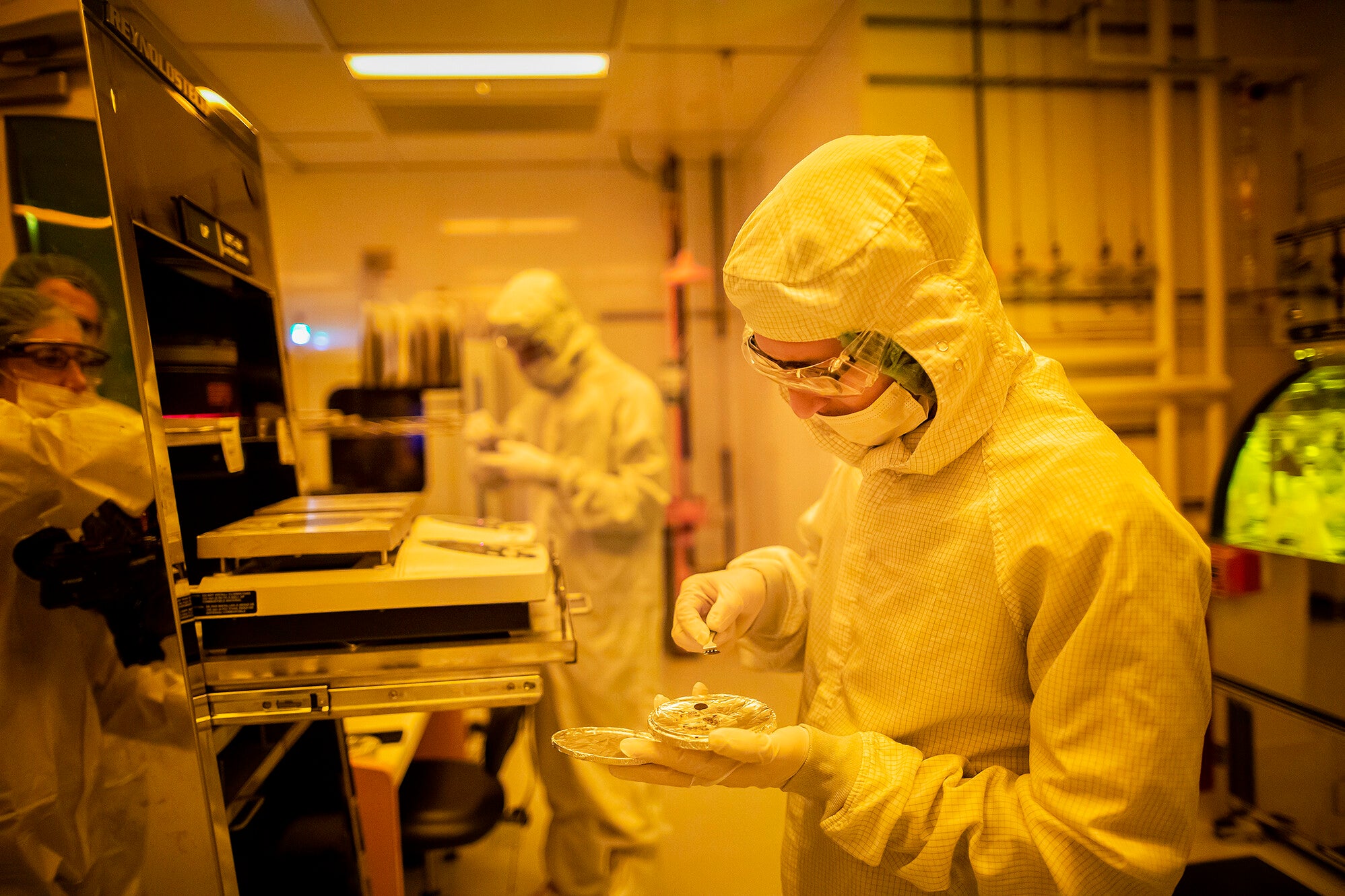
Beating the heat: Designing cooling for bodies in motion
Dorit Aviv, director of Weitzman’s Thermal Architecture Lab, studies how humans, technology, and design intersect, paving the way for the development of novel approaches to cooling people efficiently.
Upcoming Events
 Special Events
Reimagining STEM Education in Energy & Sustainability
This workshop will provide Penn students and faculty engaged in energy and sustainability work across fields with the opportunity to interact, learn from each other, and build resources to reshape graduate training. The workshop will focus on the climate space, but there will be insights translatable to other fields. This free, multidisciplinary program is suitable for students, faculty, postdocs, and practitioners from all fields relevant to energy and sustainability. Register to attend.
 Music
Music
Penn Live Arts: Afro Latin Jazz Ensemble
The Afro Latin Jazz Ensemble—led by Arturo O’Farrill and comprised of multi-Grammy Award-winning musicians—will perform works from across the Latin jazz canon, as well as O’Farrill’s own compositions. Students can receive a discount with Penn ID.
 Special Events
Spring Blossoms Tour
Visitors will celebrate the joys of spring as the garden and trees bloom. The vibrant flowers change on a weekly basis as the season unfolds, bringing bursts of color and fragrance. Free with Penn ID.
Federal Government Updates
Penn is closely monitoring federal policy changes affecting institutions of higher education and academic health systems.
Title IX Compliance in Athletics
Penn's Title IX Resolution with the U.S. Department of Education Office for Civil Rights
Penn Priorities
A look at a few of our big picture priorities that improve Penn as we create knowledge to benefit the world.


Stay Connected





Equal Opportunity and Nondiscrimination at Penn
The University of Pennsylvania seeks talented students, faculty, and staff with a wide variety of backgrounds, experiences, and perspectives. The University of Pennsylvania does not discriminate on the basis of race, color, sex, sexual orientation, religion, creed, national origin (including shared ancestry or ethnic characteristics), citizenship status, age, disability, veteran status or any other class protected under applicable federal, state, or local law in the administration of its admissions, financial aid, educational or athletic programs, or other University-administered programs or in its employment practices. Questions or complaints regarding this policy should be directed to the executive director of the Office of Equal Opportunity Programs; Franklin Building, 3451 Walnut Street, Suite 421, Philadelphia, PA 19104-6106; or (215) 898-6993.